
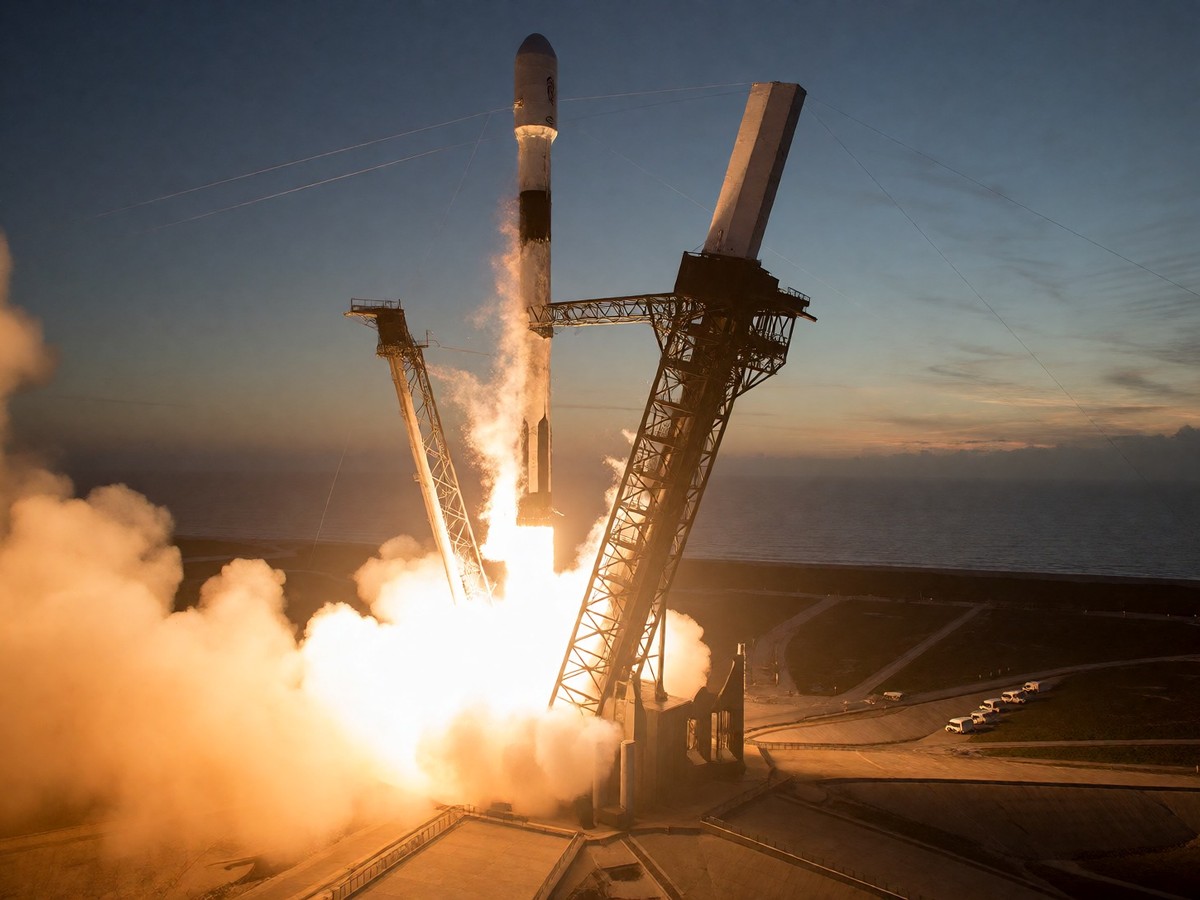
The Federal Communications Commission granted SpaceX conditional approval on Wednesday to deploy a constellation of up to 1 million satellites for its orbital data center business. This regulatory victory allows Elon Musk to pursue moving AI data centers into space via the Starmind satellite network. Amazon, which builds a competitor to SpaceX’s Starlink service, argued in its petition that the application lacked basic details and described the project as a "lofty ambition rather than a real plan." The company, along with Viasat and the American Astronomical Society, also argued the proposal risks real harm due to orbital debris, congestion, radiofrequency interference, and environmental consequences. The FCC dismissed concerns regarding potential threats to scientific research because the agency determined those issues fell outside its regulatory authority. FCC Chair Brendan Carr stated the action "opens a bold new frontier for the computing infrastructure needed to power America’s leadership and growth." Musk thanked Carr on X, saying the project would be a great asset to America and the world.
Technical constraints and orbital requirements
SpaceX faces significant technical and economic challenges, such as the need to dramatically reduce the cost of manufacturing and launching satellites, cool processors in space, and secure financing for chips that are destined for orbit. The company must also clear regulatory hurdles regarding how it handles orbital debris for satellites operating above 600 kilometers. While current rules require satellites below 2,000 kilometers to reenter the atmosphere within five years of mission completion, SpaceX requested a waiver to move retired satellites into different orbits around Earth or the sun, according to the FCC authorization document.
| Feature | Specification |
|---|---|
| Satellite Altitude | 500 to 1,002 km |
| Primary Communication | Lasers |
| Backup Communication | Radiofrequency |
| First Operational Satellite | Within 7 years |
| Full Constellation | Within 14 years |
The Starmind satellites will use lasers to connect with other satellites, including the Starlink network. SpaceX plans to deploy these units at altitudes ranging from 500 to 1,002 kilometers. This regulatory approval specifically gives SpaceX the authority to use radiofrequency communications to maintain contact with and control its orbital data centers from Earth if their primary communications systems fail. The FCC has given SpaceX seven years to get its first operational satellite into orbit and 14 years to deploy the entire constellation.